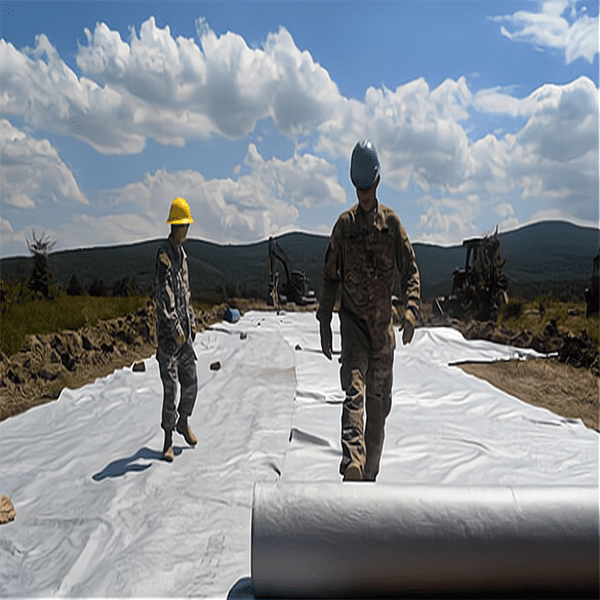
Geotextiles for laying roads and railways
Geotextiles are a building material used in civil engineering. Short or long fibers are laid into a mesh shape using various equipment and processes, and then the different fibers are tangled and woven together using processes such as needling. Standardization of fabric allows it to be made soft and thick to meet the demands of different thicknesses. The mechanical functions of short strand/filament geotextile include water permeability, earthquake insulation, reverse filtration, drainage, stability, strengthening, etc. It can adapt to uneven conditions. An uneven base layer can resist damage caused by external construction forces and has little creep. Has a load holding function.
Role in road construction:
1. Strengthening the base layer: Non-woven geotextile can be used to strengthen the base layer of the road. It can prevent moisture penetration and sedimentation in the soil layer, improve soil stability and improve the load-bearing capacity of roads.
2. Prevent soil loss: In road construction, non-woven geotextile fabrics can be used to control erosion and soil loss. It can resist water and wind erosion and protect the soil next to the road from being washed away.
3. Strengthening the road surface: Non-woven geotextiles can be used to strengthen the road surface. It can effectively distribute the load on the ground and provide good support, preventing subsidence and destruction of the soil.
4. Road surface repair: When the road surface appears cracked or damaged, non-woven geotextile can be used to repair the road surface. It can fill cracks, improve the strength and durability of the pavement, and extend the life of the road.
5. Prevent lawn growth: In some areas where roads need to be kept clear, non-woven geotextiles can be used to prevent lawn growth. It stops weed growth and reduces the amount of maintenance required.
Between the shotcrete and the precast tunnel roof, rock movement or the rough surface of the shotcrete can damage the insulation membrane between them, causing water leakage. To avoid this danger, a geotextile is laid between them, which withstands high mechanical pressure, protects the insulating layer and acts as a filling layer, thus not only protecting the insulating layer, but also acting as surface drainage, so that water seeping from the rock is channeled through the non-woven fabric into the drainage pipe or downspout.